Secrets of the Tome introduces a full new class, the pactweaver! One of our most rich and complex classes ever, the pactweaver merits a chapter all to itself.
The voices were overwhelming, but they were nothing compared to the images. Fen struggled to hold his focus and his sense of self from the onslaught of other consciousnesses pressing in on him. He could feel other minds overlapping with his, then retreating, magic coming into his grasp and slipping away, ideas that weren't his filling his mind. He would have screamed, but he wasn’t sure it would be his own voice.
“Shush.” The voice was scratchy, feminine, and incomprehensibly old.
“Shoo.” And then there was silence.
A wizened, pale-scaled lizardfolk looked down at him as he slowly uncurled himself from the fetal position. “Well,” she said after a moment, “you have certainly learned how to make contact with spirits. Now let’s get you trained on controlling that contact so you don’t turn into some ravening monster I have to put down.”
The pactweaver gains magical power by negotiating with mysterious powers. Unlike a warlock or a cleric, a pactweaver can make or break bargains with multiple entities, drastically transforming their own magical abilities as they do so. As the pactweaver gains levels, they can treat with godlike entities known as arch spirits - but such deals always come with a price. In Secrets of the Tome, you’ll find well over 100 spirits ready to bind and bargain with, each with different gifts to offer.
Pactweavers are spellcasters who’ve learned to reach out to magical spirits and bind them, drawing magic and knowledge from the spirits they interact with. Pactweavers are a diverse bunch, with some coming from societies where ancestor worship holds sway, others hailing from more philosophical backgrounds where they connect with conceptual frameworks, and still others forming alliances with beings from other planes or the natural world.
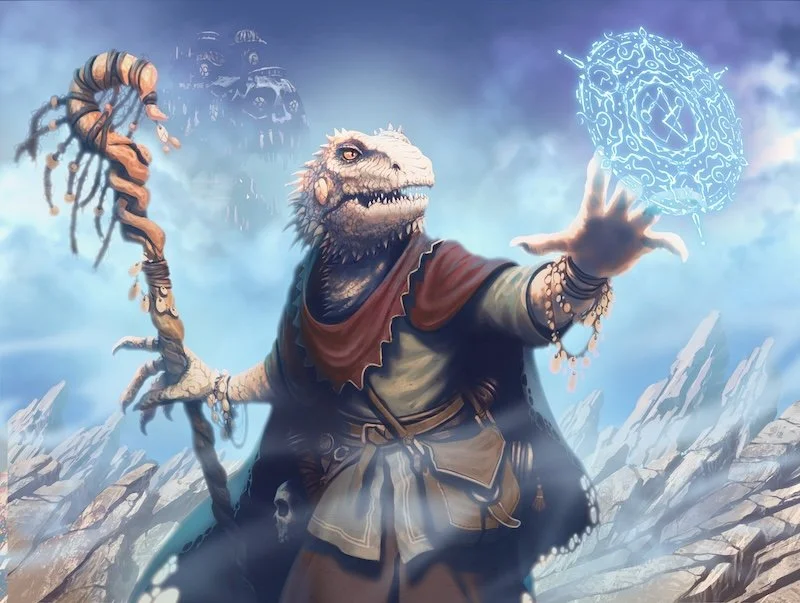
Our iconic pactweaver is Eridna White Scales, antediluvian animist. Eridna is quite possibly the oldest living mortal spellcaster. She is an Animistic Guide pactweaver who was part of a lizardfolk society so old that there is no longer any record of it, and she claims to have lived in a world before mammals.
A Transactional Spellcaster
Unlike warlocks, clerics, or even druids that form singular bonds of service or devotion, pactweavers make much more temporary agreements with the spirits they bind. Pactweavers are generally comfortable binding different types of spirits based on the situations they expect to encounter, and this can sometimes cause friction with those who devote themselves to a god or other supernatural patron. Nevertheless, many pactweavers fill the role of faith leader in their communities, particularly in more animistic societies. After all, if there is a spirit in everything, why would you trust your spiritual life to someone who can deal with only a single spiritual entity, no matter how powerful?
Versatile Magics
With the ability to draw from a pool of known spirits, pactweavers can, with a little preparation, handle a variety of different problems by calling upon spirits for magic and knowledge designed to solve those problems. Pactweavers typically develop a pragmatic and diplomatic worldview, cooperating with different spirits at different times to solve different problems. Some operate with gentleness and respect, while others treat their spirits as tools to be used and discarded.
Subclasses
Of course, the pactweaver has its own subclasses, and we include five--the Animistic Guide, Conceptualist, Devoted, Furtive, and Spirit Warrior!
Animistic Guide. Animistic guides are pactweavers who believe in the dignity of spirits of all kinds and in all things. They most often come from tribal societies with a strong connection to the natural world and tend to regard druids and rangers as kindred spirits.
Conceptualist. Conceptualists are pactweavers who connect most strongly to the spirits that embody ideas and concepts, rather than the more literal beings that many pactweavers prefer. Conceptualists are philosophical and creative, and as part of their training and growth, they learn to manifest their own thoughtform spirit that is unique to them.
Devoted. Some pactweavers work within traditional religious hierarchies devoted to gods rather than among animistic frameworks. They tend to subscribe to moral philosophies and choose spirits in alignment with those beliefs, often working with the supernatural servants of a patron deity instead of the deity itself.
Furtive. Furtives call upon their spirits to move unseen through the hidden places of the world. Some Furtives turn up where one might expect—among the ranks of covert organizations and criminal syndicates—but others maintain a low profile for other reasons. Some of the most accomplished Furtives of ages past were monastics who practiced isolation as a ritualistic discipline.
Spirit Warrior. Spirit warriors learn spirit binding as a path to martial prowess through magic. They do so by calling upon the might of spirits that embody the ideals to which they aspire.
At 1st level, pactweavers learn to bind lesser spirits. At 7th level, they are able to treat with greater spirits. And at 13th level they gain access to dangerous arch spirits. While you have a spirit bound to you, you add its spells to your spell list and gain the spirit’s feature(s). When you release a spirit, you lose access to its spells and features until you bind it again.
Secrets of the Tome contains over 100 spirits for your pactweaver to interact with, along with rules for creating new spirits. As well as degrees of lesser, greater, and arch spirits, spirits come in different types.
Lesser Spirits
Lesser spirits aren’t very powerful and don’t have strong personalities. Even novice pactweavers can bind multiple ones and do so without the spirits exerting any control over the pactweaver’s actions. In some cases, lesser spirits might not be the same spirit; each time a pactweaver needs one, they might call up a different (but mechanically identical) spirit of the appropriate type to aid them.
Elemental spirits. As their name indicates, elemental spirits are spirits tied to one or two of the four classical elements of air, earth, fire, and water. Elemental spirits are a popular choice among pactweavers for their ubiquity and useful spells. Elemental spirits include Air, Earth, Fire, Water, Cloud, Dust, Magma, Mud, Smoke, and Steam.
Mask spirits. Mask spirits are personifications of the mortal experience, rising out of the collective mortal exposure to the ideas they embody. They are thought forms of the truest kind, springing into being entirely from the experiences of others. These include Aggression, Caution, Cooperation, Empathy, Independence, Intuition, Logic, Planning, Spontaneity, and Willpower.
Ancestor spirits. Ancestor spirits are the souls of humanoids the pactweaver reveres or otherwise shares kinship with. They might be actual ancestors or simply a past member of the pactweaver’s society who distinguished themself in some way. Here we have the Berserker, Creator, Cultivator, Healer, Hunter, Leader, Smith, Sneak, Soldier, and Steward.
Beast spirits. Beast spirits are archetypal representations of a species of animal, rather than the departed soul of that animal. Beast spirits are popular with pactweavers from animistic traditions who seek connection to the larger world through their arts. Bond with the Bear, Bull, Eagle, Fox, Owl, Raven, Shark, Snake, Spider, or Wolf.
Fey spirits. Fey usually manifest as corporeal beings, but they have a spiritual nature, and some choose to ride along with mortal pactweavers as a way to surreptitiously experience the world. Though there are many individual types of lesser fey, they fall into broad categories with similar capabilities. Fey spirits include the Helper, Reveler, Slayer, Tormentor, and Trickster.
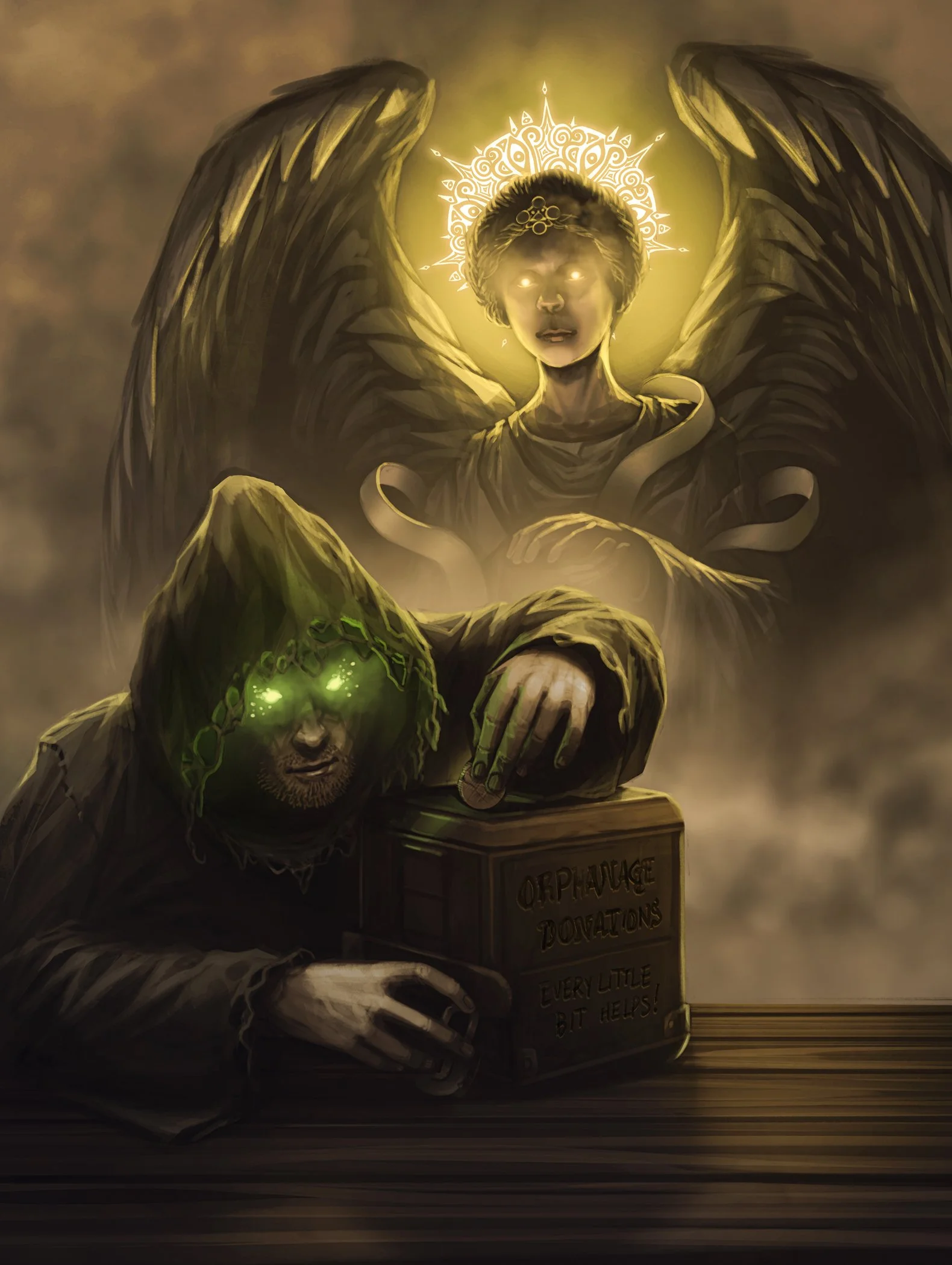
Fiend spirits. Fiends sometimes lend their spiritual essence to mortal spellcasters in hopes of capturing that mortal’s soul or accomplishing other goals on the Material Plane. Lesser fiends typically have little or no actual control over those they work with, but their gifts are dark and subtly pull mortals toward corruption when used. The Bargainer, Corrupter, Jailer, Slaughterer, and Tempter can be found here.
Celestial spirits. Minor celestial beings often attach themselves to innocent, virtuous, or heroic mortals to ensure the safety of these pure souls. When such a mortal has training as a pactweaver, they find fast friends and allies among these spirits. Learn about the Avenger, Illuminator, Messenger, Preserver, and Protector..
Undead spirits. Undead spirits, like ancestor spirits, are the souls of mortals that have died. Unlike ancestor spirits, these spirits remain tethered to existence on the mortal plane through curses, unfinished business, or sheer malice, rather than a voluntary choice to stay and assist others. Undead spirits are Hateful, Hungry, Skulking, Sorrowful, or Vengeful.
Greater Spirits
Greater spirits are more powerful than lesser spirits, but they also have stronger wills. Only more experienced pactweavers can form relationships with greater spirits. Greater spirits often attempt to exert some level of influence over the pactweavers that bind them, but ultimately they can’t supersede the will of a pactweaver.
Vice spirits. Spirits embodying the seven classic Deadly Sins, vice spirits seek to push their pactweaver toward various types of excess, violence, and fraud by providing spells and powers that enable these character flaws. Envy, Gluttony, Greed, Lust, Pride, Sloth, and Wrath can be found here.
Virtue spirits. Virtue spirits are the opposites of vice spirits, each embodying a specific virtue and encouraging their pactweavers toward that type of good conduct. Virtue spirits want their pactweavers to make the world a better place in a specific way, granting spells and features to help them achieve that goal. Virtue spirits include Charity, Diligence, Humility, Kindness, Patience, Prudence, and Temperance.
Place spirits. These spirits represent the essence of a location in much the same way that beast spirits represent the symbolic essence of various types of animal. Places such as the Arena, City, Forest, Fortress, Graveyard, Sea, and Theatre.
Monstrous spirits. Monstrous spirits are essentially more powerful versions of beast spirits, and like beast spirits, they’re popular with pactweavers of an animistic bent who feel a kinship to the spirits of other beings in the world. There are spirits of the Basilisk, Gelatinous Cube, Mimic, Owlbear, Phase Spider, Purple Worm, and Shambling Mound.
Greater ancestor spirits. Greater ancestor spirits are departed ancestors revered for their great and enduring accomplishments. Typically, there are only a few greater ancestors every generation, and they are significantly more powerful than other ancestor spirits. You can bargain with the Mage, Priest, Scoundrel, or Warlord.
Aberrant spirits. Aberrant spirits are eldritch beings from beyond the bounds of the mortal world. They are unsettling to bind, but their power is undeniable. These include Gaze, Grasp, Madness, and Void.
Greater elemental spirits. Greater elemental spirits are the spiritual essence of the lords of the elemental planes that have agreed to assist a pactweaver. Some of these spirits might be djinn, divi, efreet, or marids, or they might simply be more powerful classical elementals. In either case, their counsel is highly coveted by pactweavers who wish to control the fundamental forces of the natural world. Greater Air, Greater Earth, Greater Fire, and Greater Water await you.
Dream spirits. Dream spirits, like mask spirits, are thoughtforms manifested from the common paths tread by mortal consciousness. Unlike masks, they’re manifestations of subconscious thought, revealing what lies beneath the surface of the collective minds of mortalkind. Dream spirits include Flying, Silence, Tardiness, and Testing.
Arch Spirits
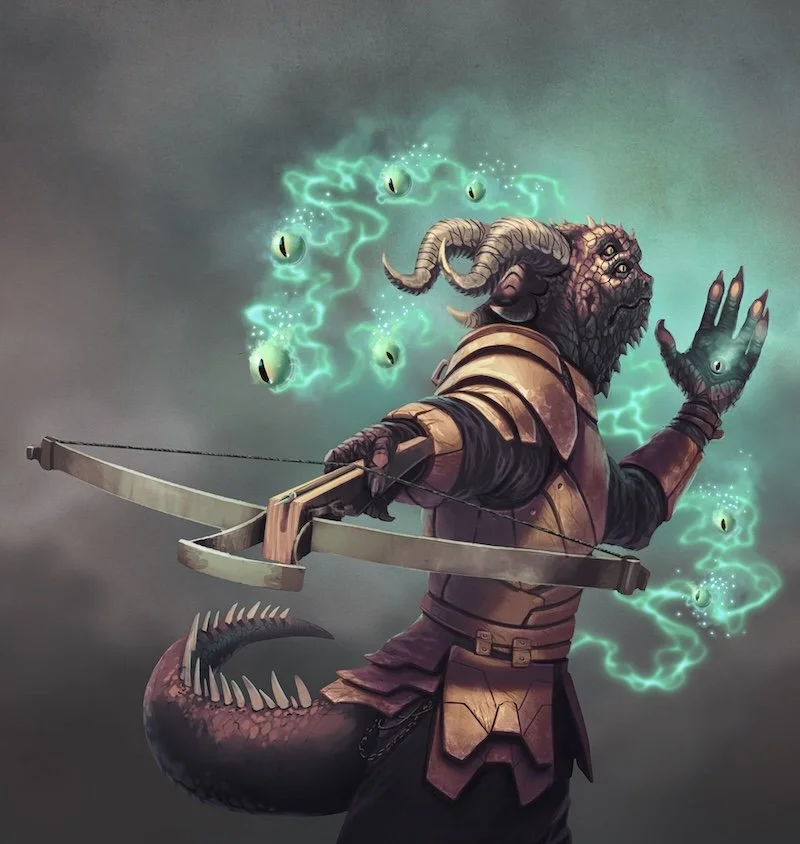
Arch spirits are the most powerful spirits mortal pactweavers can bind. Though the pactweaver remains the dominant partner in the relationship, arch spirits have minds of their own, and there are certain behaviors arch spirits won’t tolerate, known as taboos. A pactweaver that violates an arch spirit’s taboo might find the spirit unbinding itself, leaving the pactweaver without access to its power. Arch spirits are singular, individual beings and don’t come in lists, but they’re not limited to a single pactweaver—multiple pactweavers could bind The Grim Wanderer simultaneously, for example. There are two primary types of arch spirit. Embodiments are the manifested essence of powerful, archetypal concepts, while vestiges are the lingering souls of powerful beings.
Embodiments. Embodiments typically come in opposed pairs. The embodiments in this book represent death and life (The Grim Wanderer and The Verdance), mirth and solemnity (The Jester and The Cold-Hearted), duty and defiance (The Old Soldier and The Renegade), and truth and lies (The Truthseeker and The Unwelcome Guest).
Vestiges. These are the lingering presence of powerful entities such as Ashteral, Cirothe, Blorblagh the Sleeping Sickness, Grallithurb the Caustic Overlord, Holtrathamogg, Mynozua the Lady of Storms, Ottua the Mountain Lord, and Scarflower the Lady of Swords.
Example Spirits
Here are three example spirits, one lesser, one greater, and one arch spirit.
Mud
Lesser spirit, elemental (earth, water)
Spell List
1: grease
2: mudhole*
3: slow
Features
Muck Jumper. You ignore difficult terrain caused by mud, ooze, slime, grease, and similar gooey, sticky, or slippery substances. In addition, you are immune to the effects of the grease spell.
City
Greater spirit, place
City spirits encompass the vibrant nature of urban life and often spontaneously manifest from the teeming masses of mortal thought and emotion around the communities they call home. They encourage their pactweavers to foster community, diversity, trade, and culture.
Spell List
1: comprehend languages
2: alter self
3: tongues
4: private sanctum
5: creation
6: word of recall
Features
Lore of the City. You gain proficiency with the Culture and History skills, or an expertise die if you already have proficiency with either skill.
Savvy Shopper. If you spend 8 hours exploring the shops and commercial areas of a city of at least 5,000 people, you can purchase any mundane gear at a 20% discount. At the Narrator’s discretion, you might also be able to purchase common or uncommon magical gear at a 10% discount.
Street Sense. You can’t become lost in urban areas, and while in a city, you have advantage on Investigation and Perception checks.
Mynozua, The Lady of Storms
Arch spirit, vestige
While she lived, Mynozua was some sort of powerful being of storms. Various stories identify her as a goddess and an archfey; she might well have been both. Among pactweavers, she’s renowned for her powerful sense of justice, and she refuses to tolerate unfairness on the part of her pactweavers.
Taboos: Treat another being unfairly. Cover your head when outside in a storm.
Spell List
1: air wave
2: gust of wind
3: call lightning
4: ice storm
5: storm kick
6: chain lightning
7: reverse gravity
8: control weather
9: storm of vengeance
Features
Armaments of the Storm Lady. You gain proficiency with bastard swords, glaives, greatswords, javelins, and longswords. When you hit a creature with a weapon attack using one of these weapons, you deal the target an additional 1d6 lightning damage.
Borne Aloft. You gain a fly speed of 50 feet.
Thunderclap Fanfare. Whenever you land from a fall or jump from a height of at least 10 feet, you can use your reaction to set off a wave of thunder around you. If you do, each creature in a 15-cube within 5 feet of the space you where you land must make a Constitution saving throw against your spell save DC. On a failed save, the creature takes 2d8 thunder damage and is pushed 10 feet away from you. On a success, the creature takes half as much damage and isn’t pushed.
Voice of Thunder. You gain a semblance of Mynozua’s powerful, resonant voice. You learn the thaumaturgy cantrip. You also have advantage on Intimidation checks you make while speaking, as well as to Performance checks made to sing.